
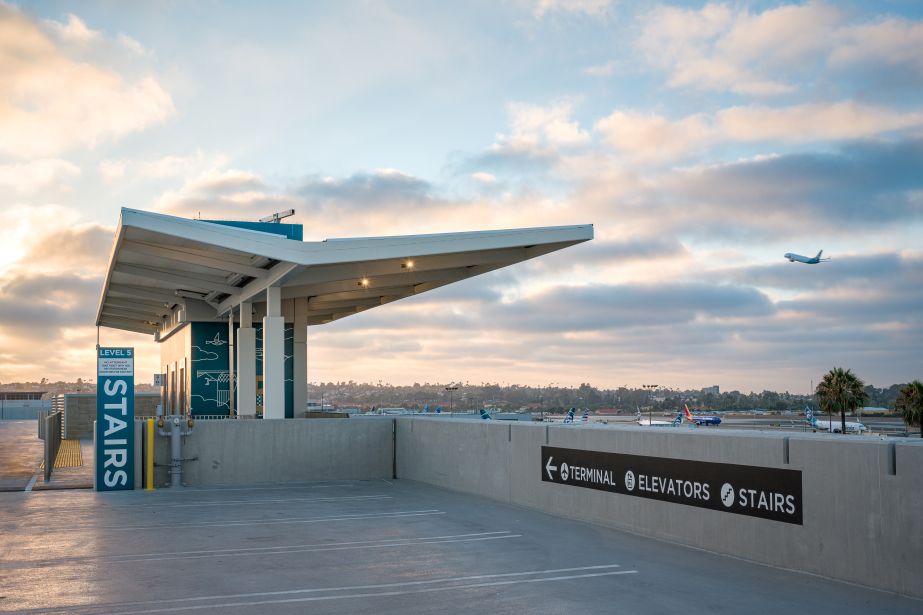
Aviation Expertise Meets Parking Structure Innovation
How Swinerton’s design-build expertise and self-perform capabilities are redefining parking infrastructure at America’s busiest airports.
For more than 70 years, Swinerton has been building a wide range of aviation projects—from major international airports to smaller regional and municipal hubs. We’ve worked at more than 50 airports and airfields across the country, delivering about $500 million in aviation projects every year and more than $3.8 billion to date.
We are currently involved in aviation work at 24 airports across the country. The steady stream of new and repeat projects shows the trust our partners place in us—and our commitment to great service and high‑quality construction.
As passenger volumes continue to climb, the demand for efficient, intuitive parking has never been greater. At Swinerton, we’ve been partnering with airports across the country to deliver large‑scale, high‑performance parking facilities that enhance mobility, streamline access, and expand much‑needed capacity. These next‑generation garages do more than store vehicles. They elevate the passenger experience.
Parking Built for Modern Travelers
Our recent airport projects feature the amenities passengers expect—and the ones they don’t realize they need until they experience them. Each structure includes:
- Secure, covered parking designed for comfort and peace of mind
- Clear, intuitive guidance systems to reduce searching and congestion
- Sustainable design elements, from EV charging stations to drought‑tolerant landscaping
- Smooth, direct connections to airport transit, helping travelers get from their car to the terminal with ease
And because airports never sleep, we’re experts at delivering these complex facilities in the middle of busy, high‑security environments—without interrupting day‑to‑day operations. Our teams work hand‑in‑hand with airport staff to keep travelers moving and schedules running smoothly.
Design-Build Excellence, Tailored to Every Project
Every airport has its own unique needs. That’s why we combine top‑tier design‑build expertise with robust self‑perform capabilities to construct cast‑in‑place parking structures of any size or complexity. Our flexible approach gives clients options—from fully customized garages to Perq, our pre‑designed, pre‑engineered solution that accelerates delivery and shortens time to market. Whether using traditional delivery methods or innovative turnkey solutions, we focus on adding value from the earliest design discussions through final turnover.
Precision Meets Performance
Behind every Swinerton airport project is a deeply experienced, hands‑on team. Our specialists lead every step of the process:
- BIM coordination and detailing – reduces redesign, clashes, and downstream delays
- In‑house fabrication – shortens procurement timelines and strengthens quality control
- Concrete forming and placement – ensures consistent production rates and reliable sequencing
- Quality and schedule management – minimizes operational disruptions and supports predictable outcomes
By combining the accuracy and craftsmanship of a specialty trade partner with the scale and oversight of a seasoned general contractor, we maintain tight control over quality, schedule, and cost—ensuring predictable results and superior performance.
When all these elements work together, airports receive tangible value:
- Greater certainty in schedule, budget, and phasing
- Improved operational continuity during construction
- A partner invested in long-term performance, not just project completion
- A structure built for durability and ease of maintenance
Notable Swinerton airport parking structure projects
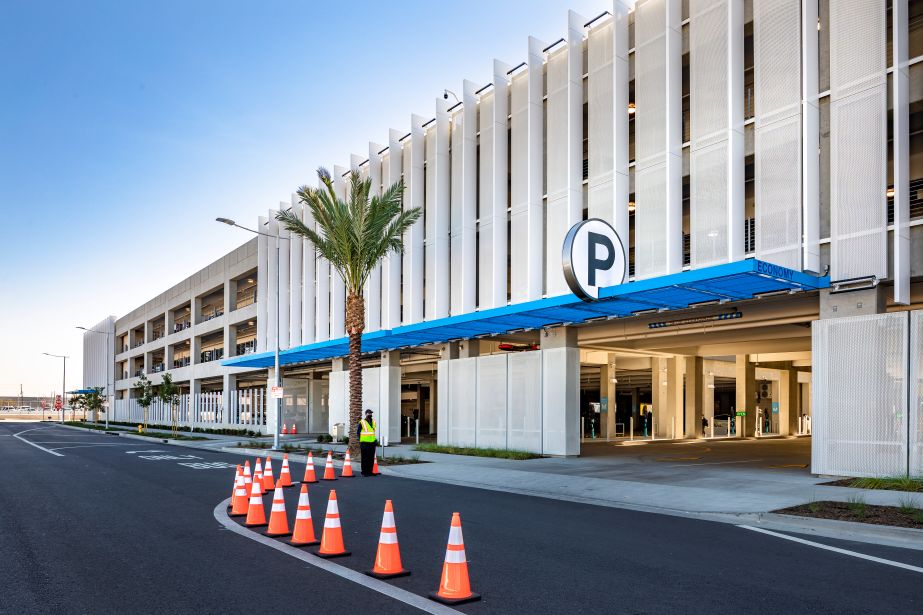
Swinerton built a four-story, 1,730,000-square-foot facility at LAX providing approximately 4,300 parking stalls. The project’s scope included progressive design-build services for the largest parking structure Swinerton had constructed.
The structure is directly connected to the Automated People Mover (APM) train system via two pedestrian bridges, offering travelers convenient access to the airport without entering the Central Terminal Area. Key features include a fully integrated parking guidance system, smart parking technology, and optimized vehicular circulation with multiple pick-up and drop-off areas. The facility is a mobility hub, offering amenities such as Meet and Greet spaces, public restrooms, vending machines, a pet relief area, water bottle filling stations, and future valet parking. Sustainable elements include EV charging stations, drought-tolerant landscaping, energy-saving LED light controls, and reserved parking for low-emitting vehicles and carpools.
The Swinerton team delivered two major parking plazas at SAN supporting airport growth. Both projects were large, complex facilities built in an active airport environment, requiring extensive coordination with a broad network of stakeholders.
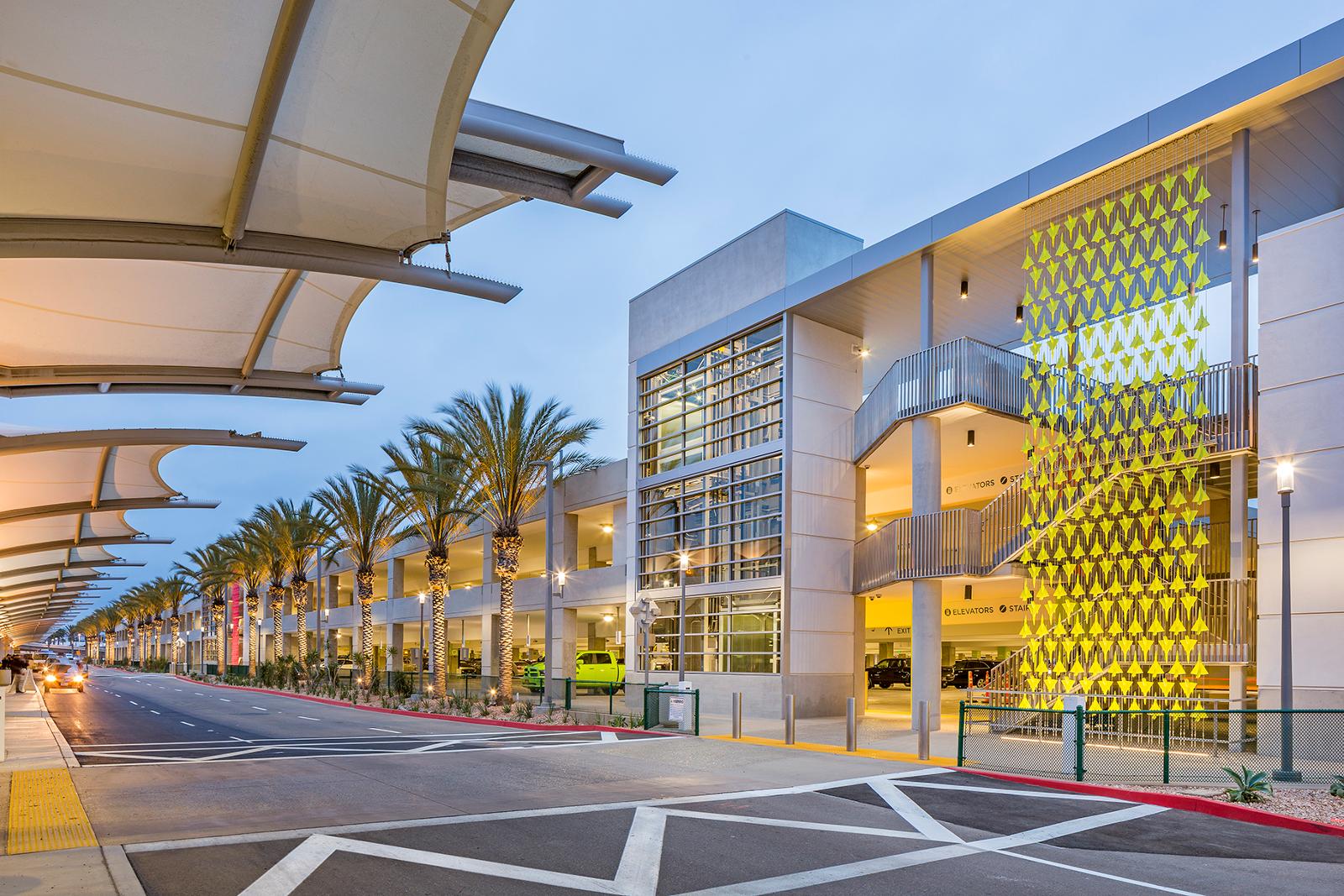
The Terminal 2 Parking Plaza is a three-level, 920,000-square-foot cast-in-place concrete parking structure providing 2,700 stalls. Delivered through a progressive design-build approach, the project is a primary gateway to the airport, enhancing the traveler experience with advanced technology and sustainable features. The scope included the integration of a Parking Guidance System and License Plate Recognition System to streamline parking and improve passenger convenience. The design incorporates both active and passive safety features, as well as local artwork that doubles as wayfinding cues. Offsite improvements included parking lot reconfigurations, utility relocations, and connections to the existing airport infrastructure. Swinerton self-performed the entire concrete scope of work, ensuring quality and schedule control. The Parking Plaza is highly energy efficient, featuring EV charging stations and energy-saving lighting, and has earned multiple sustainability awards, including Parksmart Gold certification.
Completed in 2018, the Terminal 2 Parking Plaza incorporated several design solutions later applied to the Terminal 1 Parking Plaza. Among these were landscaped lightwells that guide passengers from their vehicles to the terminal, bring natural light deep into the structure, and eliminate the need for costly expansion joints typically required at this scale.
Both parking plazas also prioritized an advanced technology experience. Integrated parking guidance, access, and revenue control systems allow passengers to reserve spaces in advance and use real-time data to locate available stalls. License plate recognition enables automatic entry for pre-booked customers, while others may enter ticketlessly with a credit card or QR code. Pay-on-foot kiosks are conveniently located near elevator cores.
For the Terminal 1 Parking Plaza, Swinerton provided design-build services for a new five-story, two‑million‑square‑foot structure with 5,230 stalls, increasing SAN’s total close‑in parking capacity to 8,500 spaces. The fully sprinklered facility sits atop deep foundations and utilizes Type 1A (S‑2) construction with long-span Cunningham beams. Key features include an external speed ramp, three elevator banks with three traction elevators each, an advanced parking guidance system that reduces vehicle emissions by directing customers quickly to open stalls, electric vehicle charging stations, one‑hour pick‑up spaces, entry kiosks, and a tire‑inflation station. The new plaza enhances traveler convenience and supports the airport’s ongoing modernization.

The Denver International Airport MOD 4 East Parking Structure is a five-level, 615,400-square-foot cast-in-place parking facility that added over 1,800 stalls to the airport’s capacity.
Delivered through a design-build approach, the project addressed the airport’s rapid growth and the need for additional close-in parking options. The scope included relocating utilities tied to critical FAA communications infrastructure, installing new reinforced concrete pipe storm lines, and over 650 feet of 12-inch steel water main to complete the airport’s service loop—all achieved without disrupting airport operations. Additional improvements included the expansion of the Hotel Transit Center loop road and the construction of a mechanically stabilized earth wall to support adjacent raised roadways, facilitating construction logistics and minimizing impacts to airport traffic. The design-build delivery method enabled phased construction, allowing work to begin while design documents were still in progress, reducing the overall project timeline by seven months compared to previous structures.
The John Wayne Airport Terminal C Parking Structure in Santa Ana, California, is a five-level, 725,000-square-foot post-tensioned concrete facility providing over 2,000 parking stalls.
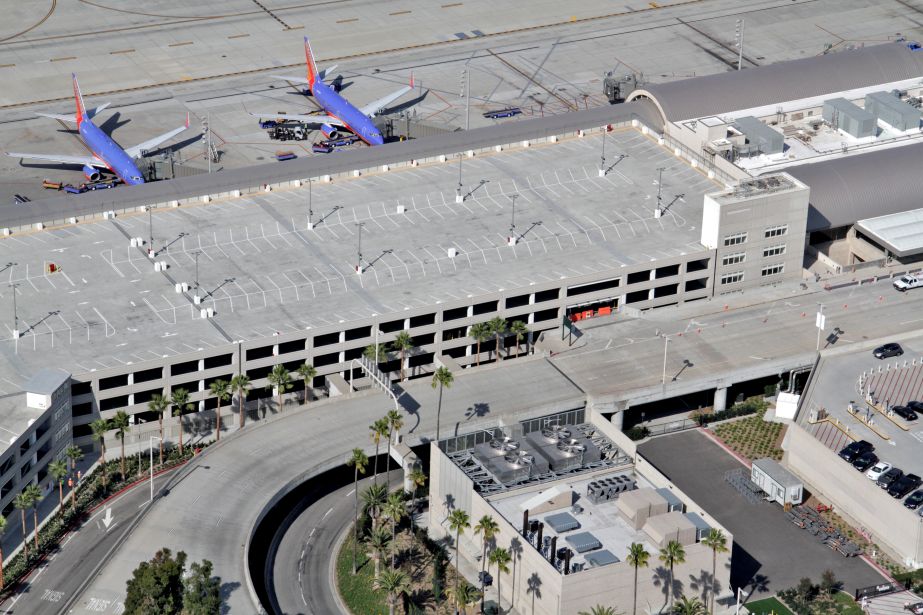
Swinerton delivered a structure that is fully clad in precast concrete panels and was one of the first in the nation to utilize buckling-restrained brace (BRB) technology—a critical advancement for seismic resilience in Southern California. Swinerton self-performed the extensive concrete scope, ensuring structural durability and quality. The parking structure supports the airport’s growing passenger demand and integrates seamlessly with the broader terminal and infrastructure improvements at John Wayne Airport.

LAX ITF Auxiliary Curbs
Swinerton is leading the preconstruction, design, and construction services for Phase 1 of this progressive design-build project at LAX. The project team is responsible for consolidating all taxi,
rideshare/transportation network company (TNC), hotel shuttle, passenger, and commercial vehicle operations into two major ground transportation hubs: Intermodal Transportation Facility (ITF) East and West.
These hubs will serve as the primary connection points for passengers arriving at LAX, helping to reduce traffic congestion within the central terminal area’s roadway loop. The project encompasses comprehensive planning, design, permitting, utility relocation, construction, and activation procedures. Its goals include enhancing the curb capacity and efficiency of the ITF East and West facilities, improving the user experience of the LAX roadway network, and modernizing the Transportation Technology Systems.
A key objective is to expand curb and staging areas at both ITF East and West, while improving adjacent roadways and addressing civil needs such as stormwater management. Design is complete; construction of roadways, parking and walkways is underway and will be supported by the integration of cutting-edge technology. The new facilities include private vehicle parking, shuttle connections, passenger pick-up and drop-off areas, waiting areas, concessions, and ticketing and information kiosks. The project also integrates the LAX Automated People Mover (APM) and a new Metro rail hub at 96th Street. A “vision plan” was developed and approved by LAWA, which covers site aesthetics, wayfinding, sidewalk furniture, shade canopies, restrooms, break areas, landscaping, WIFI, and other customer amenities. Additionally, the project incorporated intelligent transportation technologies, including a CCTV camera system with license plate recognition to help LAX traffic engineers monitor and manage vehicle operations effectively.

