
Regional Healthcare Lead Spotlight
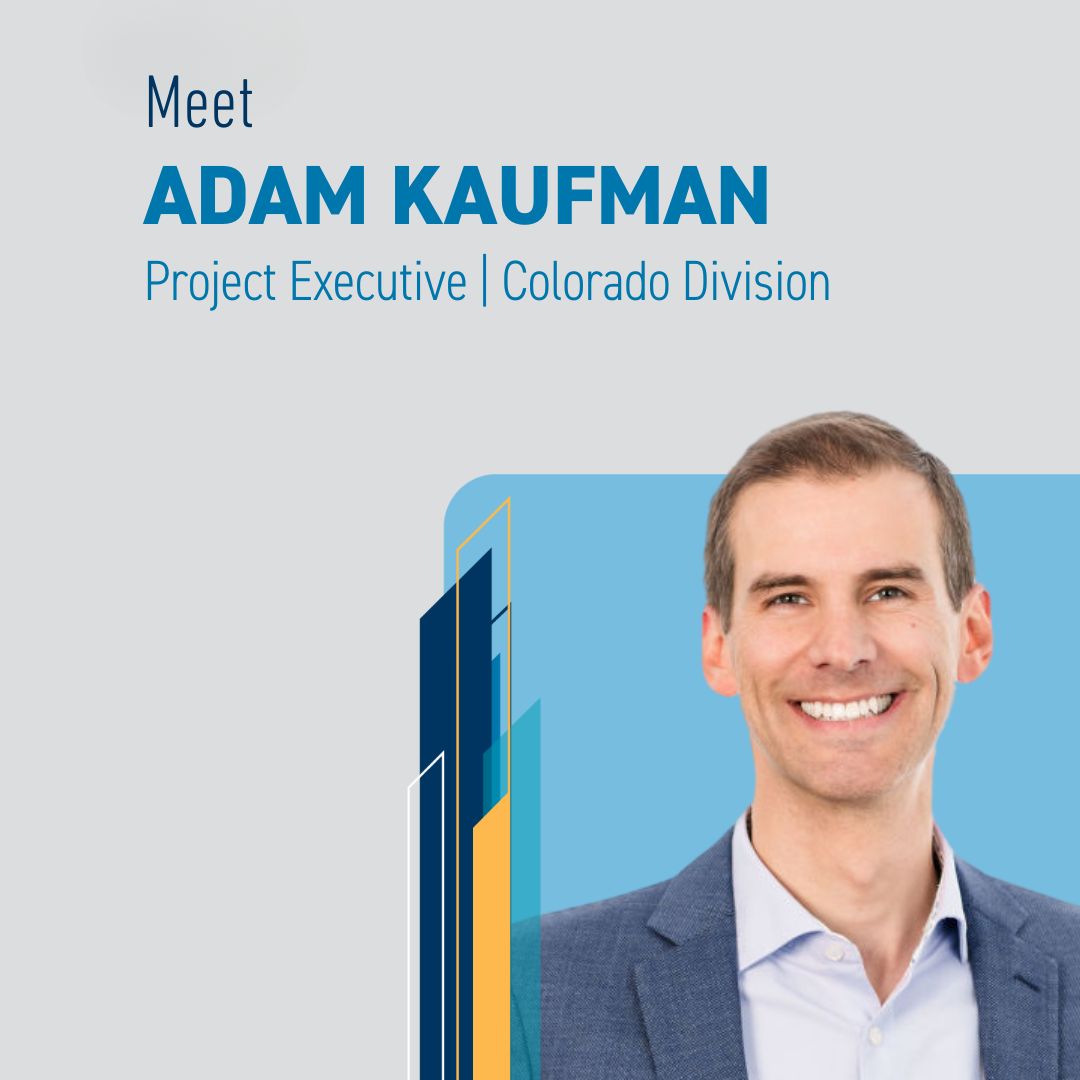
Adam Kaufman, Project Executive | Colorado Division
As Swinerton’s Healthcare Lead and Project Executive in Colorado, Adam has over two decades of hands-on experience delivering complex hospital and healthcare environments across the West Coast and Rocky Mountain region. From his early days building Kaiser facilities in California to his current role shaping Colorado’s healthcare landscape, Adam has developed a deep expertise in the intricacies, standards, and people that define this market. Since joining Swinerton in 2024, he’s played a key role in elevating our healthcare practice by championing field-driven learning, cross-market collaboration, and a team culture built on trust, technical excellence, and a true passion for building spaces that impact patient care.
Building a Career in Healthcare Construction Across Colorado
Q: How did you get into the construction industry?
I grew up in the Milwaukee area and went to the University of Wisconsin–Madison, where I tried out a few different majors. I started off thinking I’d be a math major and, though I still love math, realized quickly that it wasn’t for me. Then on to mechanical engineering and eventually Civil engineering—with a structural focus—which finally felt tangible and right.
My first internship was as a structural engineer at a nuclear power plant. The work was interesting, but honestly, the highlight of my week was the staff meeting because it was the only time I got to talk to people instead of sitting at my desk pushing calcs all day. That’s when I realized I probably belonged on the construction side.
Even without a construction management degree, I saw classmates going that route and landed an internship with a general contractor on the West Coast. They put me on a hospital project. After my summer internship, they invited me back after graduation to help finish the three-year project, and I jumped at it. That was my introduction to the unique world of hospital construction in California.
From there, it snowballed: another large project, this time a ground-up design-build hospital, then projects in Arcadia and Torrance and Tarzana among others. One hospital after another, and that’s how my healthcare construction journey started.
Q: What were your first projects or your first job titles in the industry?
I started out as a project intern and worked my way through the typical progression: project engineer, senior project engineer, assistant project manager, project manager, and eventually senior project manager. Depending on the size of the job, the title didn’t always match the role. More than once, while in a managerial role, I served in a superintendent capacity because my passion is building and that’s what the project needed.
Lessons from Diverse Construction Projects Beyond Healthcare
Q: Throughout all of these different companies, were you always focused on healthcare construction, or did you explore other types of work?
I haven’t always been in healthcare. One of my toughest projects was a non-healthcare job: a hard-bid conference and guest center right in the heart of the UCLA campus. It was a true “rip and read”—you submit a bid, they open it, and the lowest bidder wins. Hard bid, lump sum. That experience taught me a lot; I came out thinking everyone should manage a hard-bid lump-sum project at least once in their career if they want to grow. I’ve also worked on life science and lab projects, which run parallel to healthcare, and a few parking structures, which are common on healthcare campuses.
Q: What Are You Passionate About in Healthcare Construction?
I love the people the healthcare market attracts—owners, trade partners, everyone. You can’t just “fly by the seat of your pants” on a healthcare project. If you don’t know the industry, it shows immediately. Success on a healthcare project requires a certain caliber of individual, a level of sophistication built into the fabric of healthcare work, because people’s lives are literally at stake. So, you get these great minds working together and willing to take the steps and go the extra mile to build complex projects that matter.
Breaking Ground in Healthcare Construction
Q: What do you think is Swinerton’s greatest asset when it comes to healthcare construction?
I tell people all the time: if a project is ugly, hairy, complicated, and requires careful planning, that’s our sweet spot—we’ll excel in it every time. Healthcare projects are complex by nature, and that’s where we thrive.
Having a national healthcare market is a huge advantage. I know every single one of our healthcare market leaders across the country and feel comfortable picking up the phone or sending an email, knowing I’ll get support. I’ve never had that feeling at other companies — the culture of information and resource sharing here is unmatched, which makes us effective because there’s very little we haven’t seen across the country collectively.
And, of course, it’s our people. I love our team. We’re selective in hiring because everyone needs to be “all in” on the team members we interview. Healthcare construction attracts a particular type of professional, and we have a lot of them — people who are passionate and committed to delivering complex projects.
What Sets Swinerton Apart in Healthcare Projects
Q: What’s a favorite healthcare project highlight in your career?
One of my favorite projects was our UCHealth PET/CT and Cardiac CT project in Colorado, recently recognized with an ACE Award for Best Building Project, General Contractor (Under $10 Million). It was a tough job — not the most complex I’ve done — but man, I loved that team. Those people are still some of my favorite colleagues I keep in touch with.
Tough projects are always easier when like-minded people surround you, and you enjoy being around them. That team jived, had fun, and got through one of the most challenging jobs our office has taken on. For me, the people I build with make the project truly memorable — not just the construction outcome.
Q: What advice would you give younger professionals entering this industry and the healthcare market in particular?
My advice to younger professionals in healthcare construction is simple: be a builder first.
Early in your career, whether you’re a project engineer, field engineer, or assistant project manager, nobody expects you to know everything. But as you move toward project management, there is a baseline expectation that you know more, like reviewing submittals, managing safety, and understanding the trades.
Use your early years to learn everything you can in the field to be a builder. Talk with foremen, humble yourself, and soak up hands-on experience. The financials, procedures, and project management skills will come naturally. Enjoy the journey, build a strong foundation for yourself, and make the most of your time on the job site —being a builder is the core of becoming a great manager/superintendent and leader.
Looking Ahead: Building Spaces That Impact Lives
Q: Are there any obstacles that are unique to healthcare construction?
Healthcare construction comes with unique challenges, largely because projects take longer due to the steps and codes necessary for protecting the environment of care. Teams need specialized knowledge in infection prevention and the pathogens and contaminants that require control within the environments where vulnerable patients are receiving care —something you don’t often encounter in other markets.
Q: What do you see as the future of healthcare construction?
There’s an interesting shift happening toward rural care. Recent legislation includes significant funding for rural hospitals, which could bring more complexity and investment to facilities that have traditionally focused on immediate community needs. These critical access hospitals typically allocate limited resources to facility upgrades. Their primary mission is to provide essential healthcare services locally, while patients requiring advanced or specialized treatment are generally referred to metropolitan medical centers.
We may begin to see how the industry adapts as rural hospitals start to receive more funding and attention, creating new opportunities in areas where travel teams and large ground-up projects haven’t traditionally been common.
Q: What’s changed during the course of your career in terms of healthcare construction?
Outpatient care continues to grow faster than inpatient care, however, patient acuity—the complexity and intensity of care required—is steadily increasing. As the baby boomer population ages, hospitals are experiencing a higher volume of patients requiring advanced inpatient treatment rather than routine diagnostic procedures.
It’s going to be interesting to see how the industry shifts to accommodate these changing needs. I think what we’re going to find is hospitals are going to become more specialized and complex. Hospitals will likely use technology and virtual care to free up inpatient space. Standard patient rooms will start evolving to handle higher-acuity care. Basic rooms with just a few medical gases may become less common, replaced by rooms with more advanced capabilities. Swinerton aims to be at the forefront of these changes, helping shape the future of healthcare construction.
Q: Why is healthcare construction important to you?
Healthcare construction is important to me because we’re not just building spaces — we’re building environments that directly impact patient care. We build healthcare and spend a lot of time educating ourselves on this market and the complexities associated with treating patients, but I think we have an opportunity to more clearly understand what providers experience.
I’d love to see our teams shadow clinicians before we build or renovate a space. If we’re doing an interventional radiology equipment replacement, for example, it will be so helpful for the team to see how that room actually functions, hear from the staff who use it, and feel the environment instead of just relying on plans and past experience. This is the direction we’ve begun taking with our teams, and it’s only the start. My vision is to create opportunities—big or small—that bring our teams closer to the environment of care, outside of the construction area.
That firsthand understanding builds a deeper sense of purpose, belonging, and commitment to the work.

