
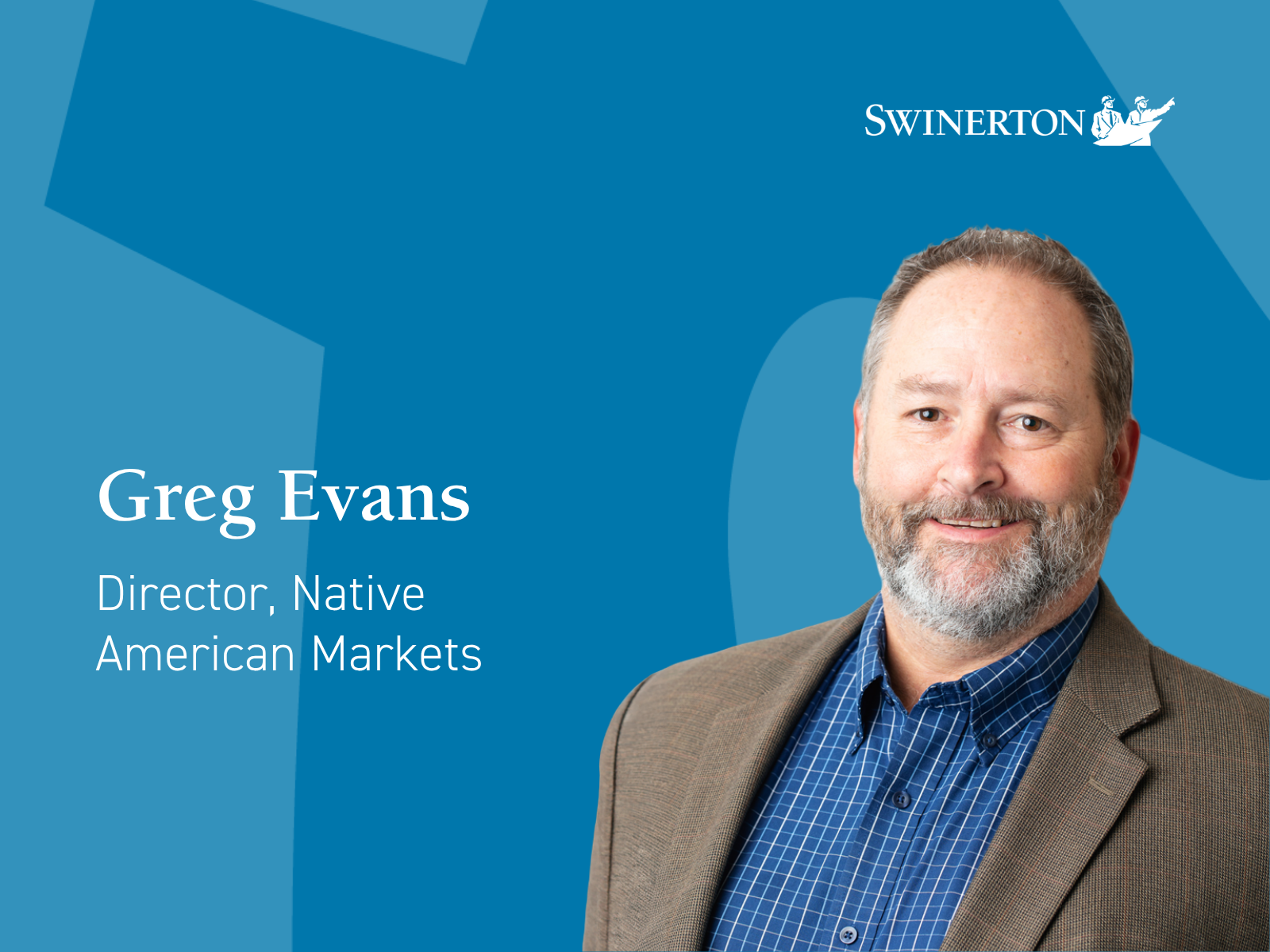
Greg Evans: Building Trust, Not Just Casinos
How Swinerton is helping tribal nations expand beyond gaming—and why trust remains the most valuable asset in construction.
Greg Evans has spent more than 30 years in construction, but his true expertise goes far beyond delivering complex projects. As Director of Native American Markets at Swinerton, he has become a trusted advisor to tribal leaders across the Pacific Northwest, guiding projects that not only shape communities but also strengthen community well-being.
Over 15 years with Swinerton, Evans has partnered with more than 31 tribes, leading landmark developments including the Tulalip Casino Remodel and Expansion, Spokane Tribe Casino STEP Phases 1–3, ilani Casino Resort, and the Lummi Administrative Building. His portfolio spans gaming, hospitality, healthcare, and civic infrastructure—reflecting a career built on long-term relationships and cultural understanding.
In the following conversation, Evans shares insights on market evolution, project strategy, workforce partnerships, and the role trust plays in building lasting relationships.
Market Evolution
Q: How is the tribal construction market evolving, and where do you see it in 2030?
Gaming remains a strong market, but it’s reaching saturation in many regions.
The growth we’re seeing now is in non-gaming projects, healthcare, housing, hospitality, and civic infrastructure. That trend is tied directly to tribes investing in long-term community development.
Looking toward 2030, things could shift again depending on policy, land-into-trust approvals, and economic factors such as interest rates. But right now, the focus is clear: building for people, not just revenue.
Q: Tribal nations are investing in healthcare, administrative facilities, and community infrastructure. What’s driving that shift?
Tribes are focused on building self-sustaining communities, ones that can provide healthcare, governance, and essential services internally. Gaming has historically been the economic engine, but the long-term vision is much broader: taking care of its people holistically.
Swinerton was recently awarded a healthcare renovation for the Tulalip Tribe in Tulalip, WA, and completed a project in Seattle, WA, for the ʔálʔal Clinic – Chief Seattle Club, which provides medical, dental, pharmacy, and mental health services to Native peoples in King County.
Q: How is that evolution changing Swinerton’s role with Tribal clients?
For years, Swinerton has been known for gaming and hospitality, and we’re proud of that. But today, our role is expanding alongside our clients’ priorities.
We’re building on long-standing relationships to support a wider range of projects from healthcare to governmental buildings and infrastructure.
To support growth and development on tribal lands, Swinerton has built unique projects, including wastewater treatment facilities to recycle water for other uses and civic infrastructure to support traffic safety and flow.
Project Strategy
Q: What’s the most critical preconstruction decision tribes can make to protect long-term value?
Bring your builder on early or risk designing something that doesn’t align with reality.
Too often, projects move far into design without validating cost, schedule, and constructability. That can lead to redesign, schedule delays, or compromises that could have been avoided.
The most successful projects align vision and execution from the start. When you do that, you don’t have to scale back ambition; you can protect it.
Q: Can you share a project that demonstrates that approach?
The Lummi Administrative Building in Bellingham, WA is a great example.
The Tribe had already committed a significant portion of its budget to a geothermal system before construction began on its administrative building. That meant Swinerton had to get creative—not to reduce scope, but to preserve it.
Through a focused value engineering effort, we maintained 100% of their original program. In some cases, we improved it. We replaced a high-cost terracotta façade with a Nichiha panel system that delivered better performance and a look the client ultimately preferred.
That’s what real value looks like: protecting the vision while making the numbers work.
Q: What makes renovating a 24/7 active casino different from a typical renovation project?
The biggest difference is that there’s zero operational downtime.
In office construction, you can work nights or weekends. In a casino environment, that’s peak business. Construction must happen during limited windows, often just limited hours during low guest traffic.
At the same time, the guest experience can’t suffer. We use finished wall systems that blend into the environment instead of traditional temporary barriers, and we design construction zones to feel like part of the space. Guests shouldn’t feel like they’re walking through a jobsite.
At the Muckleshoot Casino in Auburn, WA, for example, we demolished massive concrete panels just feet away from active gaming machines without interrupting operations. At Suquamish Clearwater Resort, we even incorporated viewing windows into construction barriers so guests could see what was coming next.
It’s about balancing safety, progress, and guest experience, without compromising any of them.
Q: Can you describe an unexpected challenge that was solved while keeping operations running?
Absolutely. During the Tulalip Casino Expansion, we upgraded the casino’s power infrastructure while keeping the entire gaming floor operational. That required a temporary external uninterruptible power supply (UPS) system.
At one point, part of that system overheated. It was still functioning, but we couldn’t monitor it. We had two options: replace it immediately or wait for permanent power to come online in about two weeks.
We evaluated the risk with the client and decided together to hold course. It wasn’t without risk, but it avoided a larger disruption to operations. That’s the reality of working in live environments: you’re constantly balancing risk, timing, and impact.
Workforce Partnerships
Q: Tribal Employment Rights Office (TERO) is often seen as a compliance requirement. What does it look like when it’s treated as a partnership?
It starts with mindset. We don’t treat TERO as a box to check; we treat it as a workforce partnership. That means dedicating resources to coordination, engaging early with tribal employment offices, and hosting job fairs to connect with the community.
We’ve even shifted our language from “TERO requirements” to “TERO partnerships.” That small change reflects a much larger philosophy. Words shape expectations, and expectations shape outcomes.
Q: Can you share a success story from that approach?
RJS Construction stands out. They’re a Native American– and women-owned firm we’ve mentored since 2011. They started as a small trade partner, and we worked with them to build capacity, including navigating the federal 8(a) certification process.
Today, they’re a thriving trade partner, likely ten times the size they were when we started working together. That’s the kind of long-term impact that comes from treating partnerships seriously.
Q: How do tribal projects create lasting career pathways?
We work closely with unions and trade partners to create pathways that make sense for tribal members.
For example, some programs allow tribal workers to earn union wages without duplicating benefits they already receive from the tribe, such as healthcare. That removes barriers to entry and creates more opportunities.
And those opportunities last. We still have employees working today with Swinerton’s affiliate, SAK, who started on projects like the Emerald Queen Casino nearly 20 years ago through TERO hiring.
Q: What do contractors most often misunderstand about TERO?
They underestimate it. There’s a perception among some contractors that TERO participation means inefficiency. In reality, TERO programs often produce highly qualified workers who perform just as well as any other workforce.
The issue isn’t capability, it’s bias. And when contractors move past that, they usually find project success is better than expected.
Lasting Relationships
Q: What’s the biggest trust signal you bring into a tribal partnership?
Firm track record. Word travels quickly among tribes. It’s a tight-knit community. If you do right by one tribe, others hear about it. If you don’t, they hear about that too.
Some contractors approach tribal work as one-off opportunities. We approach it as a long-term commitment. Over time, that reputation becomes your strongest asset.
Q: What advice would you give a tribal council starting a major project?
Do your homework and value honesty.
I once told a client their aggressive construction schedule “scared the hell out of me.” Other firms told them it was no problem. That honesty made an impression and ultimately helped us earn their trust.
My advice is simple: talk to past clients, check references, and choose a partner who tells you the truth, even when it’s uncomfortable. That’s how you protect your project and your community’s investment.
Final Takeaway
For Greg Evans, the measure of success isn’t just what gets built, it’s what those projects make possible.
From healthcare access to workforce development and cultural expression, every project represents something larger than construction. It’s about strengthening communities and delivering on promises.
Because in Native American construction, the most important structure you build isn’t concrete or steel, it’s trust.
