
BRIAN MCFARLANE NAMED DIRECTOR OF HEALTHCARE FOR SWINERTON’S DALLAS DIVISION
Veteran healthcare leader brings more than 30 years of design, strategy and market leadership to support continued growth in Texas.
For Bay Area public owners, the biggest project risks often emerge long before construction begins. They are accountable for meeting local hiring requirements, supporting small and diverse businesses, and demonstrating clear community benefits, all while managing cost, schedule, and public scrutiny. Yet many procurement processes continue to prioritize price over a contractor’s ability to deliver those broader outcomes. This disconnect creates a growing gap between award criteria and project success, increasing the likelihood of workforce, compliance, and stakeholder challenges before construction even begins.
As a result, public owners are navigating several overlapping pressures that increasingly shape how project success is evaluated:
- Increased scrutiny around how public dollars are spent and measured.
- Higher expectations for local hiring, workforce participation, and small-business engagement.
- Workforce shortages, making labor availability less predictable.
- Community stakeholders expect meaningful engagement before construction begins.
- Growing accountability for community outcomes alongside budget and schedule performance.
Today, success is measured not only by whether a project is delivered on time and within budget, but also by its ability to create lasting value for the communities it serves.
Why Public Owners Must Look Beyond the Low Bid
In design-bid-build and hard-bid environments, procurement structures often prioritize cost. Yet public owners are responsible for far more than budgets. They are accountable to communities, compliance agencies, and taxpayers for delivering meaningful public outcomes. In the Bay Area, where workforce availability, public accountability, and community expectations are increasingly complex, that mismatch can create risk long before construction begins.
The disconnect is clear: procurement systems emphasize price, while overall project success also depends on compliance, workforce delivery, and community alignment.
- Local hiring and workforce requirements are complex, highly regulated, and carry significant consequences for noncompliance.
- Small and diverse business participation goals are contractual obligations, not aspirational targets.
- Community expectations are high and often unmet when engagement comes too late.
- Schedule delays, workforce shortages, and stakeholder opposition become more likely when projects lack strong local relationships and community integration.
As a result, public owners are increasingly asking a different question than the one procurement systems are designed to answer: Which contractor has already built the relationships, workforce pathways, and local partnerships needed to deliver on project commitments?
What Public Owners Should Evaluate Before Awarding a Project
To reduce risk and improve project outcomes, public owners should look beyond participation commitments and evaluate a contractor’s ability to deliver on them.
- Does the contractor have established community relationships in place, or is engagement planned only after award?
- Can the contractor demonstrate a proven strategy for achieving local hiring, workforce participation, and small-business goals?
- Does the contractor have a documented track record of meeting workforce, compliance, and participation requirements on similar projects?
- Are workforce development, community engagement, and stakeholder outreach integrated into the project delivery approach from the outset?
The strongest civic partners do more than commit to community outcomes; they bring the relationships, experience, and proven processes needed to achieve them.
How Early Community Integration Reduces Civic Project Risk
Community engagement is often treated as a requirement that begins after contract award. When engagement starts too late, public owners are more likely to encounter workforce compliance challenges, stakeholder opposition, and increased project uncertainty during delivery. In practice, community integration is a preconstruction discipline that directly influences risk mitigation, bid quality, workforce readiness, and project outcomes.
Public owners are increasingly recognizing that community integration is not simply a social responsibility; it is a project delivery strategy that helps reduce risk and improve performance.
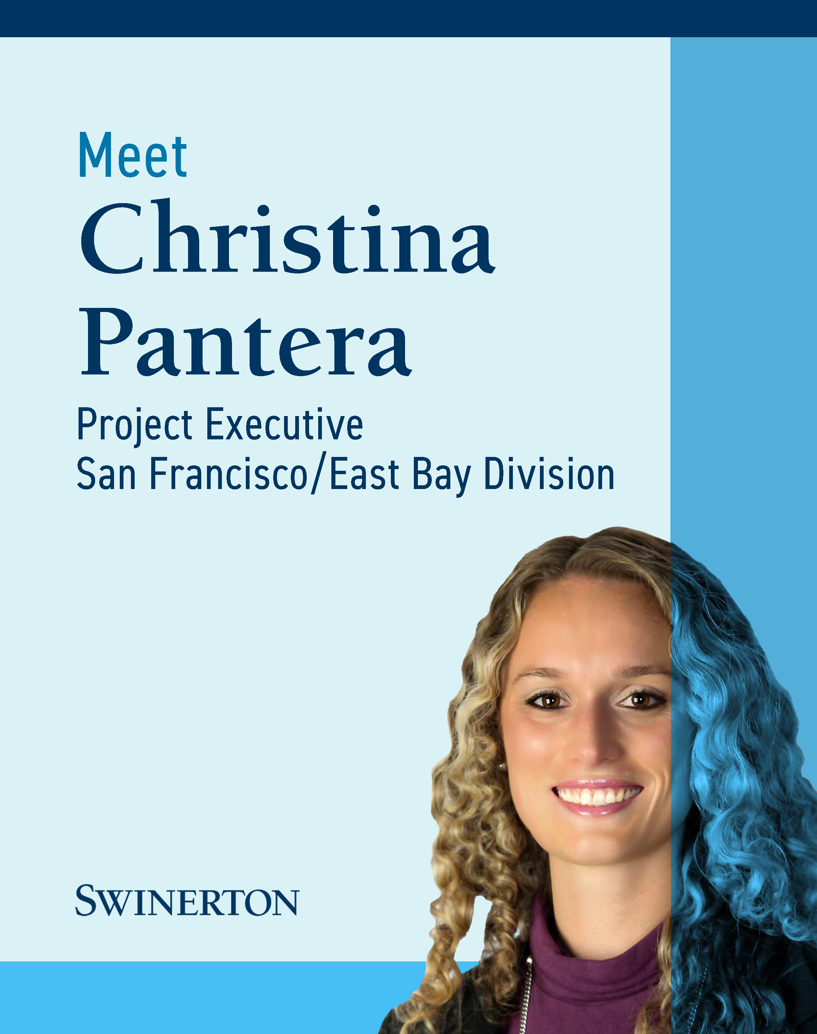
“We’ve found that workforce participation goals become dramatically easier to achieve when relationships with community organizations exist years before procurement begins,” said Swinerton’s Project Executive Christina Pantera.
A community-first approach positions outreach, workforce participation, and local engagement alongside estimating, scheduling, and logistics as essential components of successful project delivery. In practice, this means:
- Engagement begins before a bid is submitted, not after a contract is awarded.
- Workforce development pathways are established early rather than addressed reactively during construction.
- Relationships with trade partners, community organizations, and workforce stakeholders are cultivated over time, not assembled at the last minute.
For public owners, the benefits extend beyond community goodwill. Early integration helps strengthen workforce compliance, improve stakeholder alignment, reduce project uncertainty, and build a stronger foundation for successful delivery.
The result is a more credible procurement process, a more resilient project team, and a greater likelihood of achieving the workforce, participation, and community outcomes that define project success.
What Public Owners Should Look for in a Civic Construction Partner
Public owners can strengthen project outcomes by selecting contractors with established community relationships and workforce networks in place before procurement begins. Swinerton applies this approach across its civic portfolio, helping public owners achieve more consistent results in workforce participation, compliance, and community alignment.
“The most successful projects we’ve delivered weren’t built on new relationships. They were built on trust that already existed,” Pantera noted.
This approach is supported by an operating model developed through decades of civic construction throughout the Bay Area. Swinerton maintains dedicated community relations professionals, long-standing partnerships with community and workforce organizations, and established relationships with workforce development programs that create pathways to local hiring and participation. Internal initiatives such as Prep for Success help prepare small and diverse businesses to compete and perform successfully on projects, while decades of work in Bay Area communities have helped build the trust and local knowledge needed to support successful project delivery. These resources allow project teams to enter procurement with relationships and workforce pipelines already in place rather than attempting to build them after award.
To reduce risk and improve outcomes, public owners should evaluate contractors on the following:
- Evidence of established relationships before procurement, including a prequalified network of local and diverse trade partners that can strengthen bid coverage and pricing competitiveness.
- A clear plan for workforce and participation goals, including how commitments will be implemented, measured, and tracked throughout project delivery.
- A proven network of trade and community partners, rather than participation commitments, assembled solely to satisfy procurement requirements.
- Demonstrated success on similar projects, with measurable results in workforce participation, compliance, and community engagement.
Even in hard-bid environments, a community-first approach creates advantages that extend beyond procurement. Early engagement with local partners, workforce programs, and community stakeholders strengthens bid competitiveness and delivery certainty. The result is reduced risk where it matters most: labor availability, participation compliance, and community alignment, leading to fewer surprises during construction and greater confidence in project outcomes.
Strategies That Support Local Hiring, Workforce Compliance, and Community Engagement
A community-first model is not theoretical; it is operational. It shows up in how projects are structured from the outset:
1. Outreach That Starts Before Procurement
Public owners should evaluate whether outreach efforts begin before procurement and whether local partners are already aware of upcoming opportunities. Contractors with established community relationships engage local organizations, workforce programs, and small-business networks early, creating awareness and participation pipelines well before bids are due.
Common strategies include:
- Hosting pre-bid informational sessions.
- Partnering with community-based organizations and workforce development groups.
- Increasing visibility into upcoming contracting opportunities.
This early engagement helps ensure local firms and workforce partners are prepared to participate when opportunities become available.
2. Workforce Participation That Is Planned, Not Promised
Successful workforce programs rely on structure, accountability, and early coordination rather than commitments made after award.
Effective strategies include:
- Requiring workforce participation plans from trade partners.
- Coordinating with apprenticeship and workforce development organizations.
- Establishing hiring timelines, performance metrics, and utilization tracking.
These practices turn workforce commitments into actionable plans while helping contractors and owners maintain visibility into progress throughout project delivery. Trade partners are selected not only by cost, but also by their demonstrated ability to meet workforce participation requirements.
3. Procurement Strategies That Expand Access
Participation increases when procurement processes are designed to reduce barriers to entry for local and certified firms. This may include right-sizing bid packages, creating opportunities for smaller firms to compete, and conducting targeted outreach to qualified trade partners.
By expanding access early in the procurement process, public owners can strengthen competition while supporting participation goals.
Together, these strategies create a project environment where workforce participation, community engagement, and compliance are integrated into project delivery, not treated as afterthoughts. The result is greater certainty around labor availability, participation goals, and stakeholder alignment, helping reduce risk and improve project outcomes.
Examples of Swinerton’s Community Integration Delivering Measurable Results
Public owners evaluating construction partners should look for examples that demonstrate early outreach, measurable workforce outcomes, and sustained community partnerships. The following Swinerton projects illustrate the types of results owners should expect when community engagement is treated as a delivery strategy rather than a compliance exercise.
Gene Friend Recreation Center, San Francisco
Swinerton recently completed this urban recreation center serving one of San Francisco’s most densely populated and historically underserved neighborhoods. The center is home to two nonprofit community partners, United Playaz and West Bay Pilipino Multi-Service Center. Swinerton built ties with both organizations well before the RFQ was issued, hosting youth summer construction programs in 2018 and 2019. Targeted Local Business Enterprise (LBE) outreach ahead of construction strengthened the local trade partner network, and regular partnering sessions with the owner and key stakeholders have supported a collaborative delivery throughout. This early investment in community relationships translated into stronger participation, more effective stakeholder engagement, and smoother project delivery—helping support the community alignment and collaborative execution public owners rely on to keep civic projects moving forward.
The Hub community center is a pivotal milestone in the Sunnydale HOPE SF initiative to redevelop southeastern San Francisco’s Sunnydale neighborhood, home to more than 1,700 residents. The 30,000-square-foot, two-story mass timber facility anchors the redeveloped neighborhood as a center for community connection.
Swinerton exceeded its company-wide 20% small, local, and diverse business participation goal, achieving 33% across 17 firms. Seven were hyperlocal businesses owned by Sunnydale community members. Through the Sunnydale Resident Hiring Program, 12 residents were hired and sponsored by trade unions and apprenticeships, with 30 total new hires from San Francisco joining the project. Seven targeted outreach events further strengthened the Small Business Enterprise (SBE) and LBE network. Swinerton also partnered with Mercy Housing California to host a STEAM Fair for neighborhood youth, connecting families to future careers in architecture, engineering, and construction. The project demonstrates how early engagement and structured workforce planning can materially exceed participation goals while advancing the workforce, community, and economic inclusion outcomes public owners are accountable for achieving.
SFO Bus Maintenance Facility, San Francisco
Swinerton’s preconstruction, operations, and community relations teams collaborated throughout buyout, conducting targeted outreach meetings and engaging affinity organizations including National Association of Minority Contractors (NAMC), the SF Latino Contractors Association, and the Black Builders Association. Trade partners were evaluated on best value, which included small business capabilities, local workforce capacity, and community contributions. Swinerton’s “Prep for Success” program provided a standing bench of small business partners ready to perform from day one. The results exceeded goals on both workforce metrics: local resident hours reached 39% against a 30% goal, and local apprentice hours reached 59.5% against a 50% goal.
This approach ensured that participation goals were backed by ready-to-perform partners rather than last-minute commitments, reducing workforce and procurement risk while increasing confidence that participation objectives could be successfully achieved and sustained throughout delivery.
India Basin Waterfront Park at 900 Innes Avenue, San Francisco
Swinerton partnered with the A. Philip Randolph Institute to coordinate employment for 15 community members through the India Basin Training Program. The project achieved 27% LBE participation against a 20% goal, with contracts awarded to 19 hyperlocal firms. Swinerton also co-hosted a STEM community event with the A. Philip Randolph Institute to connect neighborhood youth to careers in architecture, engineering, and construction. The partnership model created a direct pipeline from training to employment, strengthening workforce outcomes while helping deliver the community benefit, economic opportunity, and local participation outcomes that public owners increasingly expect from civic investment.
BART Police Department Headquarters, Oakland
The BART Police Department Headquarters carried targeted workforce requirements, mandating that 25% of apprenticeship hours be performed by National Targeted Workers, with at least 10% performed by workers facing economic disadvantage. Swinerton met these requirements through established partnerships with Cypress Mandela Training Center and Rising Sun Center for Opportunity.
Swinerton’s more than 20-year relationship with Cypress Mandela has created workforce pathways including a scholarship program. These partnerships provide access to qualified workers and proven recruitment infrastructure, enabling project teams to meet workforce participation goals while reducing delivery risk and maintaining schedule reliability, and successful project outcomes.
How Community Integration Improves Project Performance and Public Value
When community integration begins early, the benefits extend far beyond workforce and participation metrics. It strengthens the outcomes public owners are ultimately accountable for: regulatory compliance, schedule certainty, stakeholder confidence, and responsible stewardship of public dollars.
- Higher participation from local and small businesses, helping public owners advance economic inclusion goals and demonstrate that public investment is creating opportunities within the communities it is intended to serve.
- Stronger workforce compliance and reduced enforcement risk, increasing confidence that local hiring and workforce participation commitments will be achieved, documented, and sustained throughout project delivery.
- More reliable labor pipelines, reducing schedule uncertainty and improving confidence in workforce availability from mobilization through completion.
- Greater community trust and stakeholder alignment, helping public owners maintain support for highly visible projects while minimizing disruptions that can affect schedule, delivery, and public perception.
Just as importantly, these outcomes help public owners demonstrate that civic infrastructure investments deliver value beyond the completed facility. They create workforce opportunities, strengthen local economies, generate lasting community benefits, and reinforce public trust in the stewardship of taxpayer-funded projects.
The Bottom Line: Civic Success Starts Before the First Bid
Public owners are increasingly judged not only by what they build, but by how those projects benefit the communities they serve. As workforce, participation, and community impact requirements continue to grow, contractor selection becomes a critical risk-management decision.
The most successful civic projects are delivered by partners who bring established relationships, proven workforce pipelines, and a demonstrated ability to achieve community outcomes. By evaluating these capabilities alongside cost, public owners can improve delivery certainty, strengthen accountability, and increase the likelihood that public investments generate lasting community value.

